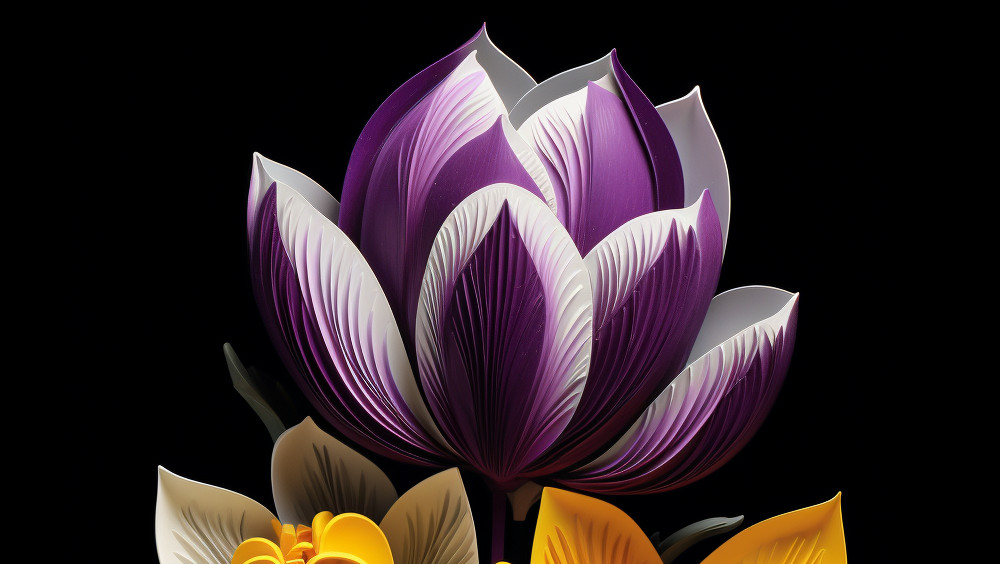
There’s something absolutely magical about crocus flowers that stops you in your tracks. These stunning purple blooms with their golden stamens are like nature’s way of saying “spring is coming” – and wow, do they make an entrance. Looking at these gorgeous specimens against that dramatic black background, you can really appreciate why artists, photographers, and flower enthusiasts have been captivated by crocuses for centuries.
A Study in Contrasts
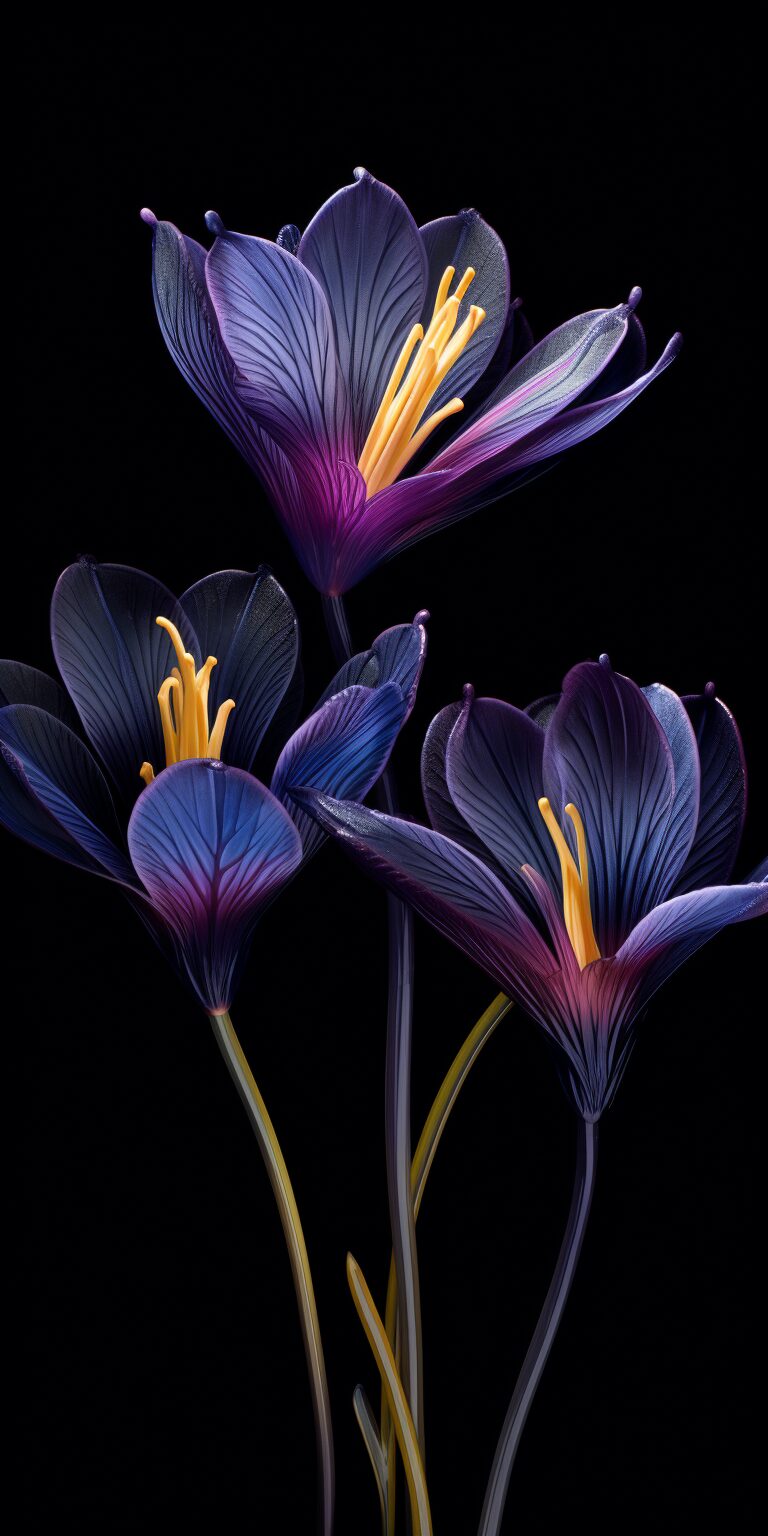
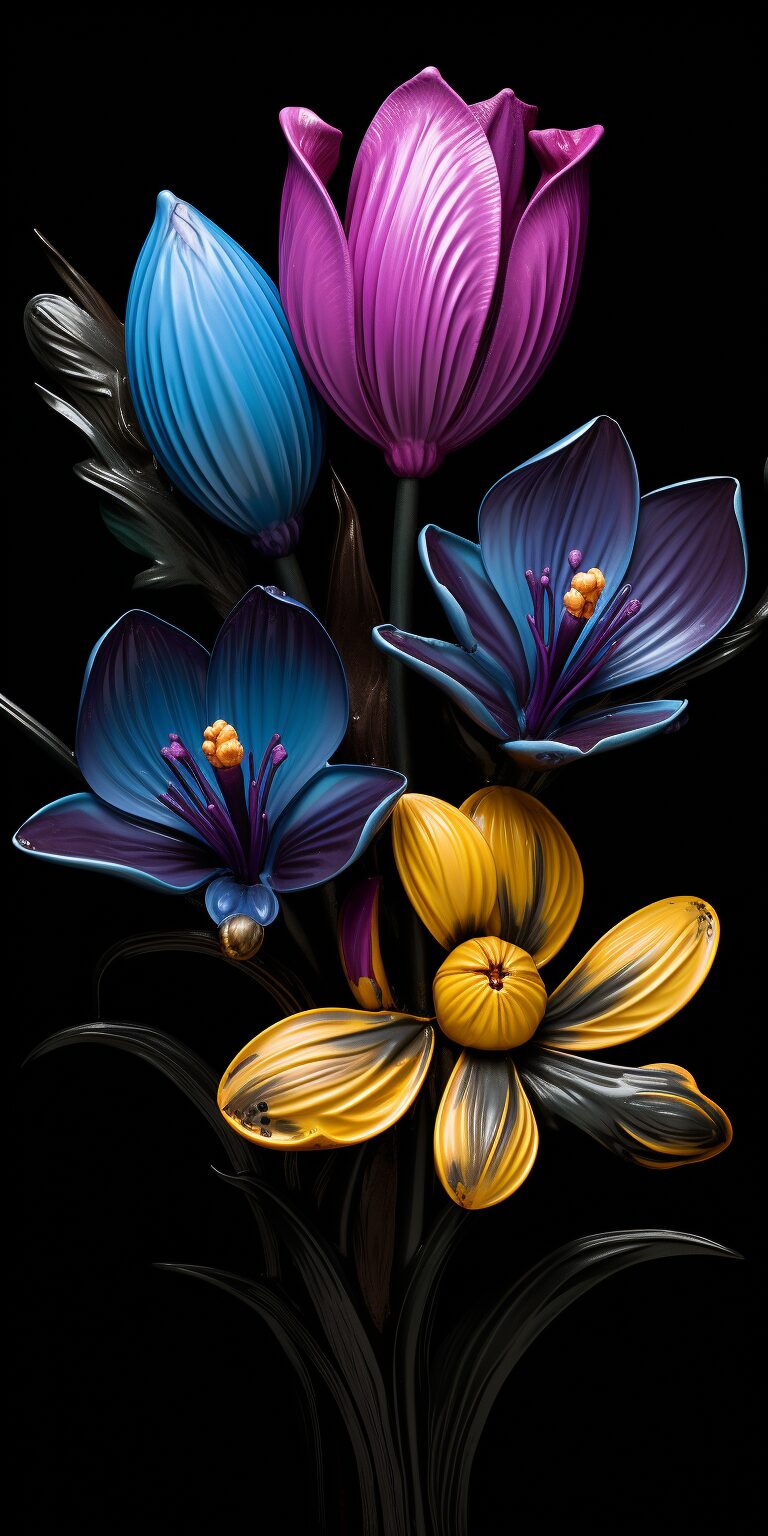
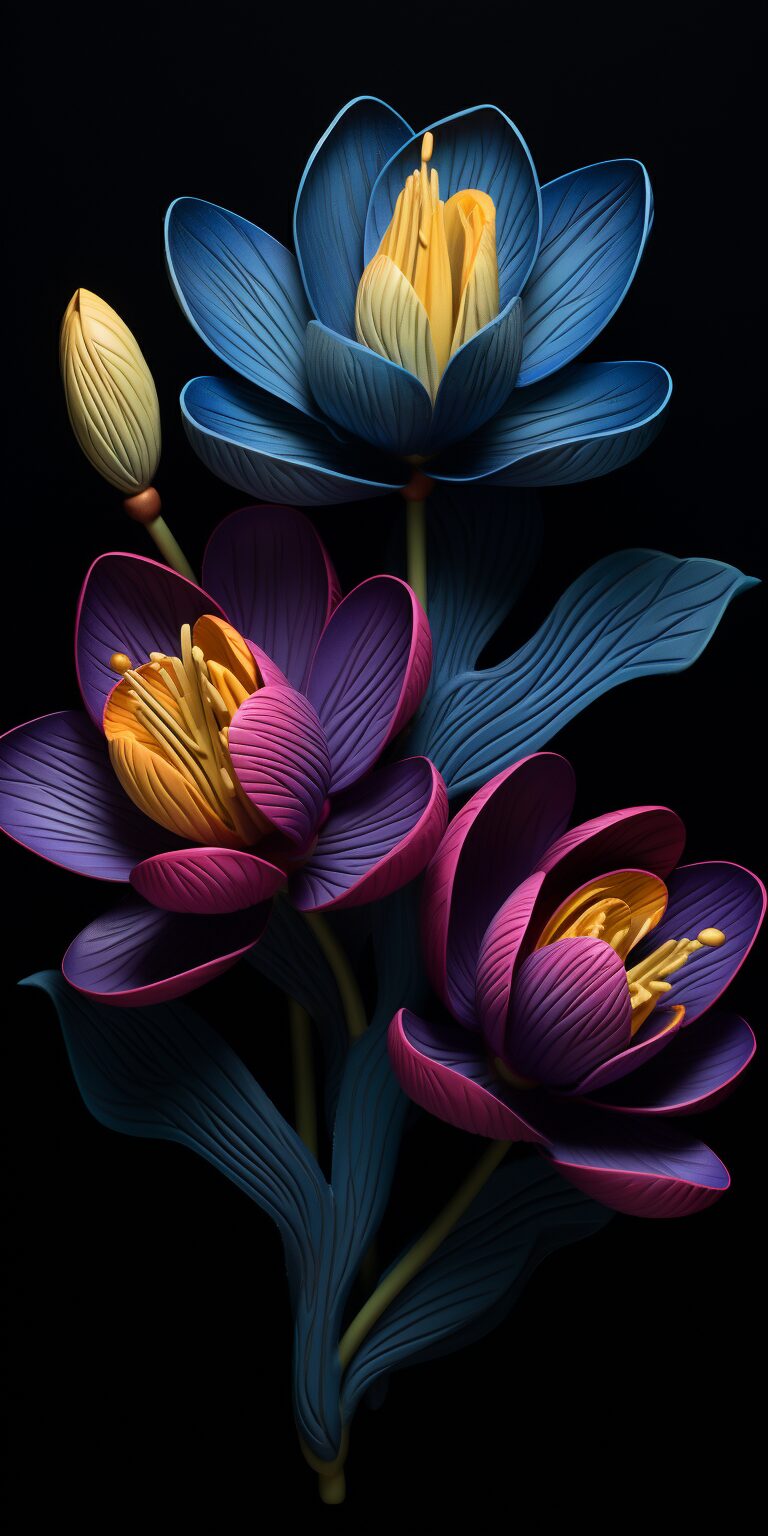
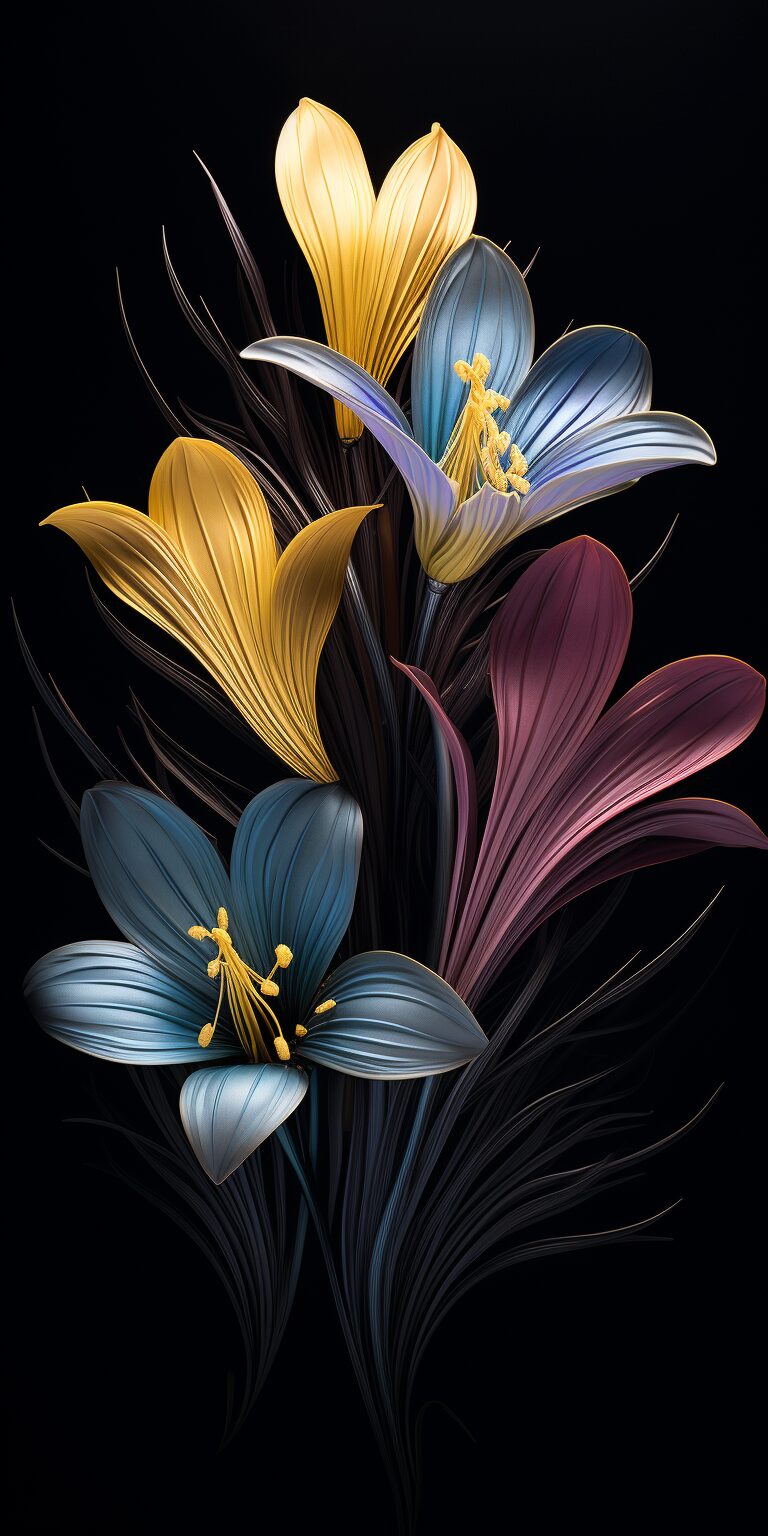
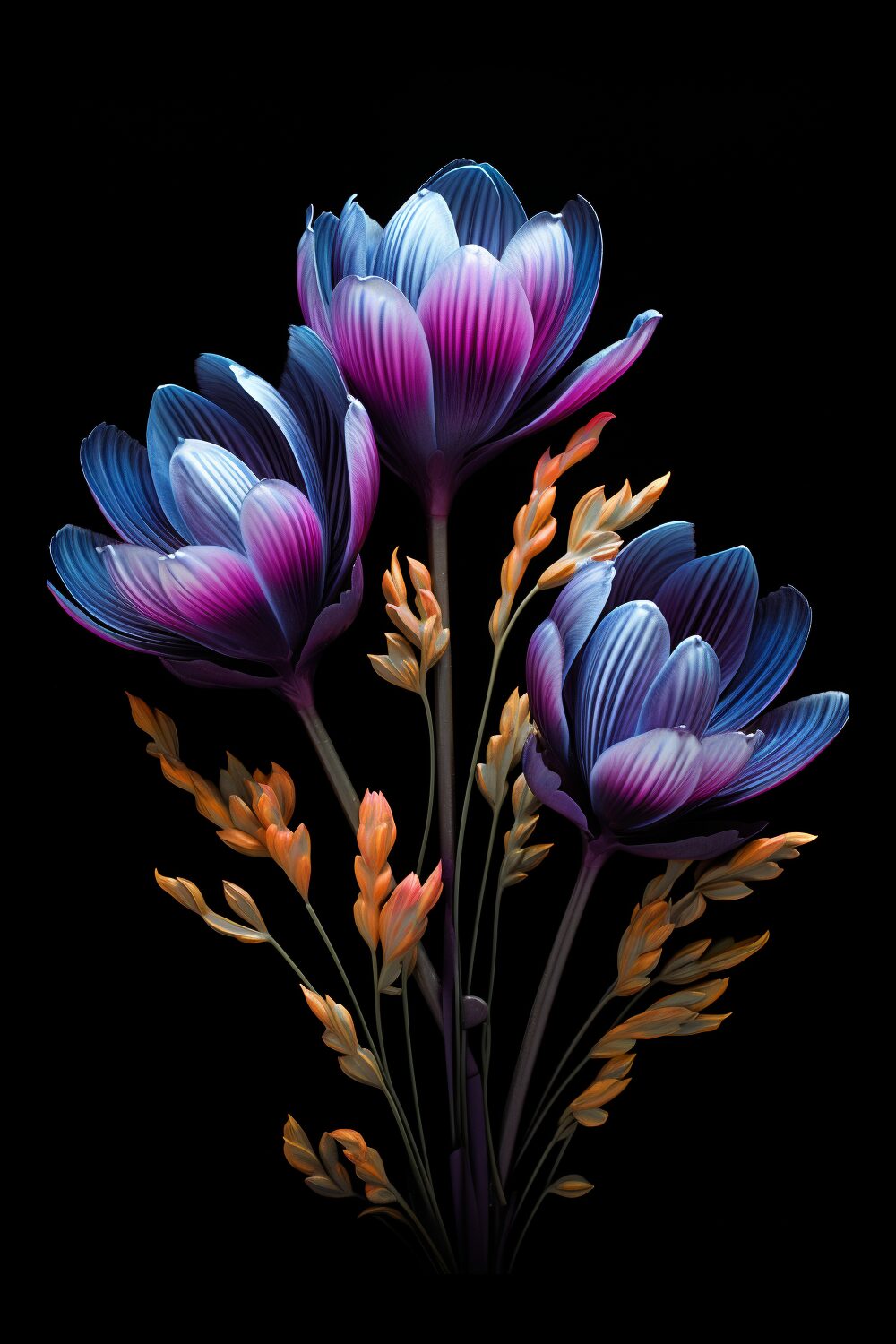
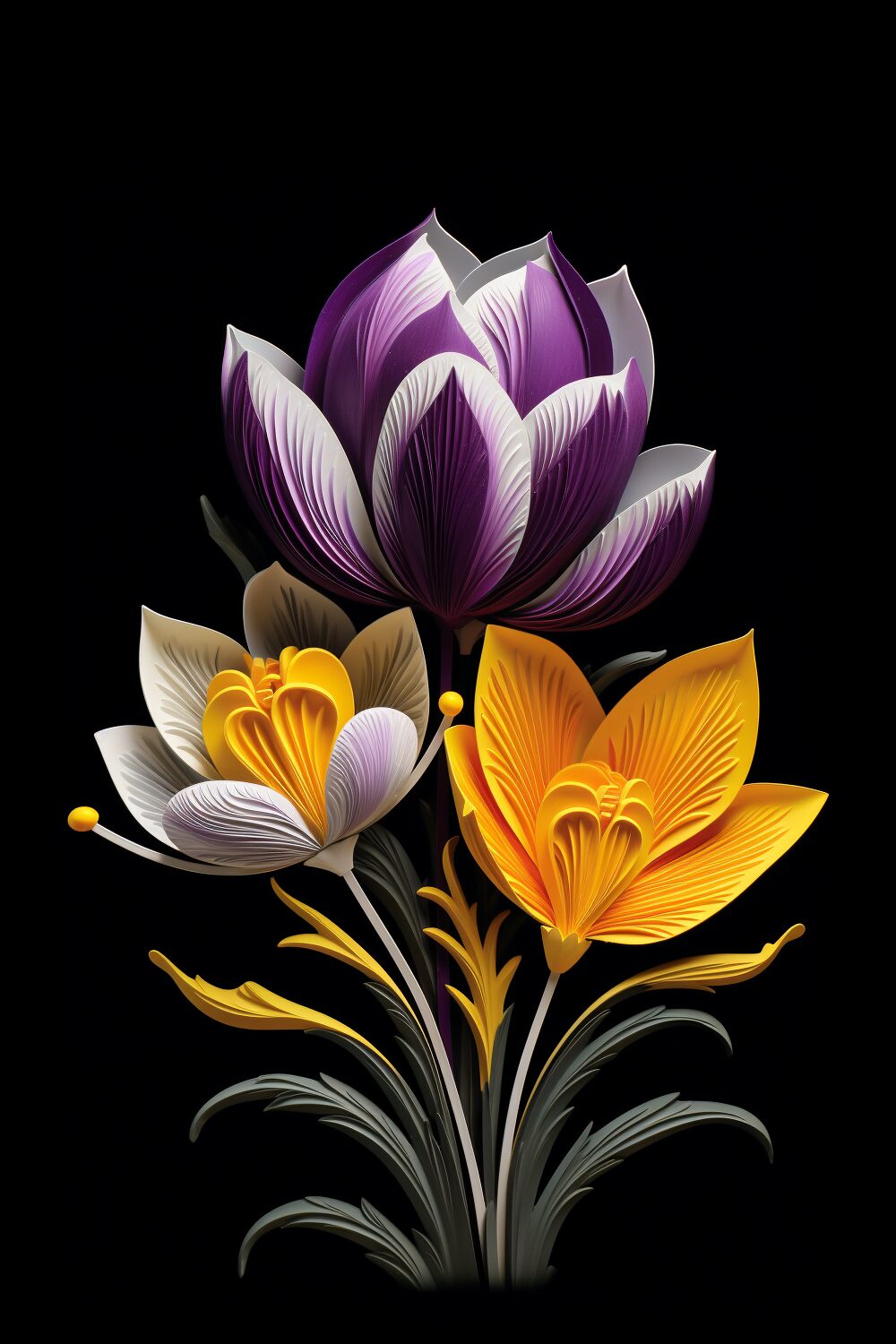
What makes these particular crocus images so striking is the play of contrasts. The deep, rich purples and blues of the petals seem to glow against the darkness, while those vibrant yellow-orange stamens create a focal point that draws your eye immediately. It’s like each flower is putting on its own little light show. The way the petals catch and reflect light – showing off those delicate veining patterns – reveals an intricate architecture that’s easy to miss when you’re just walking past a garden bed.
The color gradient on these blooms is absolutely breathtaking. Starting with deeper purples and magentas at the base, the petals transition through various shades of blue and violet as they reach upward. It’s nature’s own ombré effect, and honestly? It’s better than anything you’d find in a salon color chart.
The Anatomy of Elegance
Each crocus flower typically has six petals (technically called tepals, but we’ll keep it simple), and you can really see how they’re arranged in these photos. They open outward like a cup or goblet, creating this welcoming shape that seems to embrace the world. The petals have this incredible texture – smooth yet somehow sculptural, with those fine parallel lines running from base to tip that look almost like they were painted on by an artist with the steadiest hand imaginable.
And let’s talk about those stamens for a second. The bright golden-orange color isn’t just beautiful – it’s functional. In nature, this vibrant color acts like a beacon for early pollinators, essentially saying “hey, over here!” It’s a brilliant example of how form and function come together in the natural world.
Why Crocuses Captivate Us
There’s something deeply symbolic about crocus flowers. They’re often the first blooms to push through snow and frozen ground, making them a universal symbol of hope, renewal, and resilience. These aren’t delicate hothouse flowers that need constant pampering – these are tough little survivors that can handle whatever late winter throws at them.
The crocus species includes around 90 different varieties, with colors ranging from white and yellow to purple, striped, and even near-black. But there’s something about these purple varieties that feels particularly regal and sophisticated. Maybe it’s because purple has historically been associated with royalty and luxury, or maybe it’s just because the color is genuinely stunning. Either way, these blooms have earned their place as garden favorites.
The Art of Floral Photography
Images like these showcase why floral photography has become such an art form. By isolating these crocuses against a black background, the photographer has eliminated all distractions and allowed us to see the flowers in a completely new way. We notice details we might otherwise miss – the subtle variations in color, the way light plays across the petal surfaces, the elegant curve of each stem.
This style of photography transforms flowers from garden decorations into gallery-worthy subjects. It’s almost like looking at an X-ray or a scientific illustration, but with all the color and life intact. You can see why AI and digital artists often use references like these – they reveal the geometric precision and organic beauty that exists in nature.
Growing Your Own
If you’re inspired to grow your own crocuses after seeing these beauties, you’re in luck – they’re actually pretty easy to cultivate. These spring-blooming bulbs (technically corms) need to be planted in fall, and they prefer well-drained soil and full sun to partial shade. Plant them in clusters for maximum impact, and within a few months, you’ll have your own purple and gold display.
One of the best things about crocuses is that they naturalize beautifully, meaning they’ll come back year after year and even multiply. Imagine waking up one late winter morning to find dozens of these gorgeous blooms carpeting your lawn or garden bed. It’s the kind of natural art installation that money can’t buy – well, except for the initial investment in bulbs.
The Intersection of Nature and Technology
In our modern world of AI-generated imagery and digital art, real flowers like these crocuses remind us of the incredible artistry that exists in nature. These aren’t computer-generated gradients or digitally painted textures – they’re the real deal, shaped by millions of years of evolution and adaptation.
Yet there’s also something fitting about appreciating them through photography and digital media. It allows us to study them, share them, and find inspiration in them in ways that weren’t possible before. Whether you’re a designer looking for color palette inspiration, an artist seeking reference material, or simply someone who appreciates natural beauty, images like these offer endless possibilities.
Final Thoughts
The crocus flowers in these images are more than just pretty plants – they’re masterclasses in color, form, and natural design. They remind us that sometimes the most extraordinary art isn’t created in studios or on computers, but grows right out of the ground. So next time you see crocuses blooming in early spring, take a moment to really look at them. You might just see them in a whole new light.